断头谷
Chinese teenagers flock to tech frontline to touch the future amid AI study-tour boom_我的网站

A | 新学期 心灵守护再出发! 新学期伊始,我校积极展开校园心理危机防护培训,旨在持续强化心理委员团队建设,提升其工作效能,增强学生自我帮助与相互支持的能力。

B |
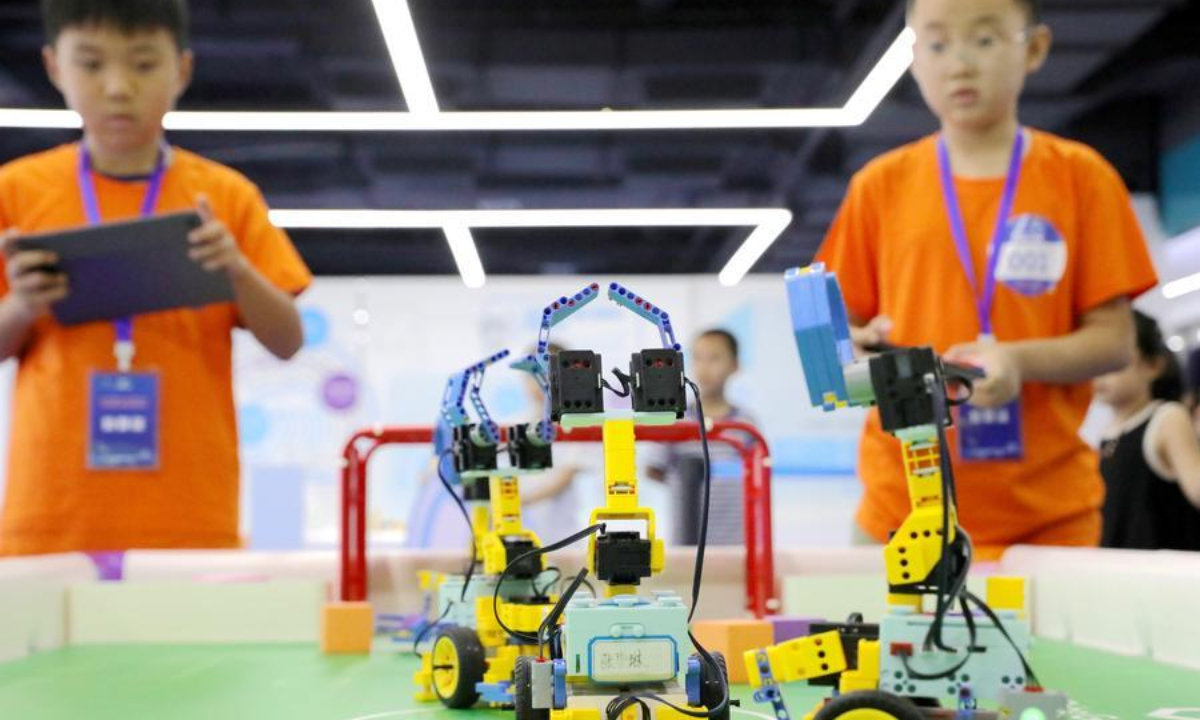
At a nearby workbench, nine-year-old Zhang Qihang was busy assembling a robot of his own. "Building robots is awesome! I can let my imagination run wild," he said, beaming with excitement.
This was the scene at an artificial intelligence (AI) summer camp -- part of a new wave of study tours gaining traction across China. Moving beyond textbooks, students are flocking to tech giants, university labs and science centers, eager to get hands-on experience with cutting-edge AI technologies and see firsthand how the future is taking shape.
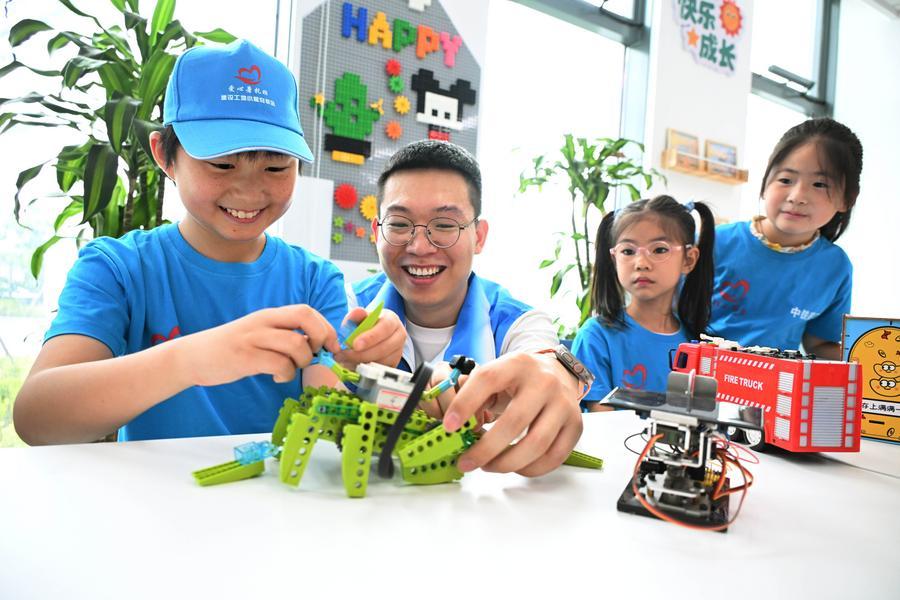
AI STUDY-TOUR BOOM
During this summer vacation, AI-themed study tours have begun to gain ground, with bookings surging 370 percent year on year, according to online travel platform Ctrip.
To tap into the growing demand for AI-focused tech tourism, a travel agency based in Nanjing, east China's Jiangsu Province, began adding visits to technology companies to its trip programs last summer. "On our Shanghai-Hangzhou independent study tours, AI-related activities now account for more than 80 percent of the itinerary," founder Zhu Ping said.
The boom is unfolding against the backdrop of China's broader AI boom, powered by a wave of homegrown models and applications. For a growing number of Chinese teenagers, AI tools such as DeepSeek, Kimi and Doubao are becoming familiar companions in their everyday lives.
The number of AI enterprises in China had surpassed 6,000 last year, and the output value of the core AI industry was projected to exceed 1.2 trillion yuan (about 177 billion U.S. dollars) during the same period, representing a year-on-year increase of nearly 30 percent.
Moreover, China was home to more than 140 humanoid robot developers in 2025, with shipments reaching 14,400 units -- accounting for 84.7 percent of the global market, according to an industry research report.
To help children prepare for an AI-driven future, China unveiled an "AI Plus Education" initiative earlier this year, encouraging schools to take AI learning beyond the classroom through after-school programs and hands-on activities. The goal is to help students understand and use AI properly, while sparking curiosity, nurturing creativity and honing their critical-thinking and problem-solving skills.
Today, the AI study-tour wave is sweeping through China's schools, as primary and secondary schools incorporate it into their educational programs. Parents are taking their children into the heart of the tech industry to see how AI transforms the real world.
China's tech-tourism boom is also drawing international visitors keen to get a close-up look at the innovation behind "Made in China."
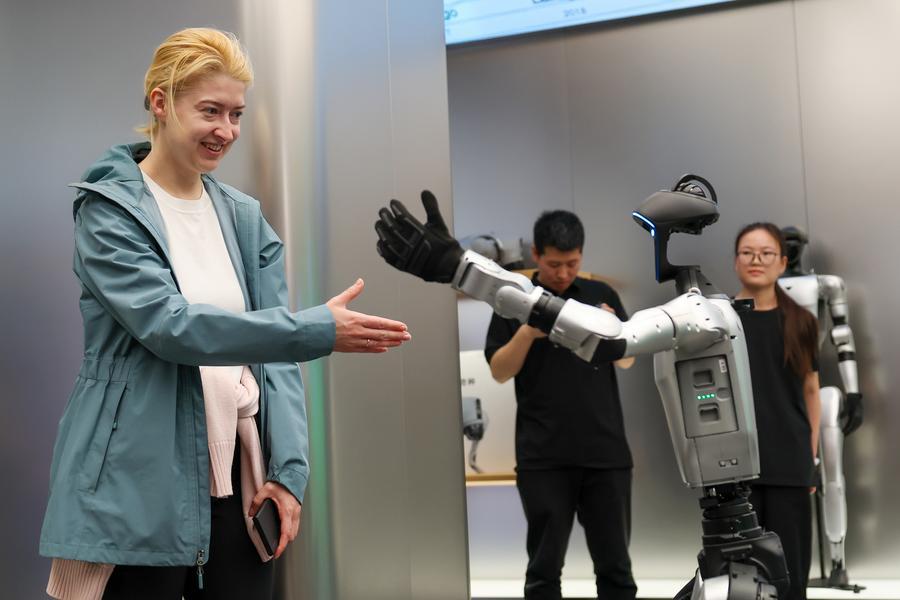
Since opening in Shanghai in May, Unitree Robotics's first embodied intelligence experience store in Asia has attracted many foreign visitors.
Victoria, from Denmark, visited the store last month. "I've seen some of the dancing videos, but it's really cool to see them in real life," she said, viewing the development of AI and robotics in China as "revolutionary, new and exciting."
FROM AI USERS TO AI CREATORS
Today's children are growing up as AI natives, already fluent in AI tools. But AI study camps are opening a new window onto how the technology is reshaping the world around them and how they can use it to make a difference.
For Liang Yiduo, a Beijing middle school student, an AI summer camp run by internet giant NetEase offered a fresh perspective on the AI technology he thought he already knew.
"I realized that large language models aren't just chatbots or simple tools," he said. "They can be assistants that work alongside you and help you create things tailored to your needs, like 'claws.'"
"The goal of the study camp is to help children move from simply using AI to understanding it, creating with it and even building their own AI agents," said Wang Lijin, director and founder of Beijing Venus Future Education Consulting Center, which assists NetEase in running its study camps.
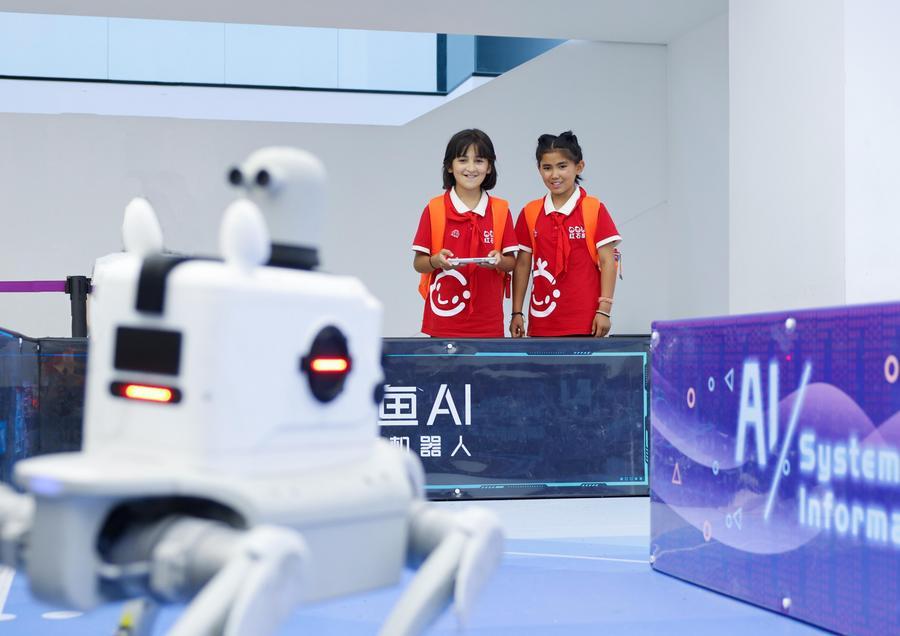
Some study tour organizers design programs around students' interests and abilities, aiming to spark curiosity and encourage deeper thinking.
Shanghai Qingbao Robot Co., Ltd., for example, offers students who enjoy building things the chance to assemble robotic arms and explore the mechanics of shoulder and neck structures. It also gives students a comparative look at the robotics and AI industries in China, the US, Europe and Japan, helping them gain a more balanced understanding of China's strengths and shortcomings.
Wang Lei, the company's chairman, believes that study tours can greatly broaden students' horizons in science and innovation. "Through immersive study tours, students start thinking for themselves about how robotics can be applied to everyday life, from unmanned retail to automated pharmacies," he said.
Some students are taking it a step further, learning to spot real-world problems and use AI to develop solutions.
In the southern Chinese city of Shenzhen, a group of students spent six days in a camp turning ideas into an AI-powered product.
"I've realized that learning AI isn't about showing off what I can do with it, but about using it to solve real problems for others," said one team member. "I want to keep learning AI so I can help more people in the future."
。本周,学校分别针对初中部和高中部的心理委员及宿舍长举办了培训会议,由专职心理健康教师卢凯香和温勇担任主讲。 初中部培训 2025年2月24日下午,卢凯香老师面向初中班级心理委员,全体宿舍长,开展了主题为《赋能心使者,共护心防线》的培训,详细阐述了心理委员的工作职责,强调要当好班级的观察者、倾听者与守护者。针对《心理晴雨表》的日常记录,卢老师强调要重点关注情绪波动、人际变化、行为异常三类信号,采用客观描述的记录方式,及时记录反馈。 对于心理委员而言,共情力能够帮助心理委员更好地理解和预测他人的情绪与行为。卢老师引导心理委员们回顾共情的四大要素:感受、表达、自我暴露和改变。通过角色扮演的方式,心理委员进一步理解了如何设身处地感受他人的内心世界,并将理解和感同身受传递给他人。

C | 培训的最后,卢老师让心理委员们填写《情绪探测单》,不断练习觉察自身情绪以及感知同伴情绪。 高中部培训 2025年2月26日晚上,温勇老师面向高中班级心理委员和全体宿舍长,开展了主题为《我们是班级的小太阳》的培训。

D | 温老师详细阐述了心理委员的角色定位、工作内容和工作职责,强调了这份工作中有关助人、自助等方面的注意事项,注重培养心理委员们的角色认同感与责任感。 在具体的工作内容和工作方法中,温老师重点强调了心理委员们在日常工作中要细心观察,发现问题及时反馈。此外,培训也详细介绍了学校心理辅导、心理关爱热线等求助途径,以便各位心理委员更好地帮助班级其他同学。

E | 此次心理委员培训,进一步强化了班校心育沟通,提高了心理委员的责任意识,有效推进学校心理健康教育工作。希望每一位心理委员都能成为同学们心中的“那束光”,照亮彼此前行的路。 审核|曾锦胜、冯海燕、周国戈 责编|蔡子怡 撰稿|黄子容 社会主义核心价值观 富强、民主、文明、和谐 自由、平等、公正、法治 爱国、敬业、诚信、友善 扫码关注 东莞市大岭山中学 和美教育 办学理念:和而不同,各美其美 校训:怀和心,做和事,求和美 校风:博文博艺,共兴共进 教风:明德明理,成己成人 学风:有爱有慧,悦己悦人。

F |
Current article:http://4drr0.senbatuqiuzhuanlanrilao.sbs/list_8f84db/m2q9ca.html
Published on:15:17:14


